Enrollment Checklist
For our incoming full-time (F1) students - please make sure you check off these items prior to your departure.
1. Pay Enrollment Deposit
All new students are required to pay the $200 non-refundable enrollment deposit. IEP and university fees can be paid with the enrollment deposit, or separately at IEP New Student Orientation. Please read the instructions below. If you have further questions, please email them to the intensive-english@ncsu.edu.
2. Check Your Personal and ncsu.edu Email Addresses OFTEN
You will receive pre-arrival emails at your personal email account. These emails are important and will arrive in the weeks leading up to your arrival. These emails will come to the personal email address you used to apply to the IEP. It is very important that you read these emails and follow any instructions included in them.
As the semester start date gets closer, you will receive emails from the IEP with information about the start of the semester at your ncsu.edu email address. These emails will contain items such as your book list, your class schedule, etc.
3. BEFORE TRAVELING – Obtain Student Visa
1. Pay the SEVIS fee (upon receipt of your I-20). The SEVIS fee is non-refundable. For more information on the SEVIS fee, and to make a payment online, visit www.FMJfee.com. Graduate students will receive further information about their I-20 in their cover letter, which will be made available in their application portal once the I-20 is issued.
2. Apply for a visa:
- Make an appointment to visit your local U.S. Embassy with your I-20 to obtain your student visa.
- When you visit the U.S. Embassy you will need to show your acceptance letter, your original bank statement(s), and your I-20 in order to be considered for an F-1 student visa.
- Once your visa is approved by the U.S. Embassy or consulate in your home country, you may enter the United States. If you are unable to get your visa, please let us know as soon as possible. Please do not enter the United States on a tourist visa.
More Information:
- Office of International Services(OIS) at NC State resources:
- Check the website for the U.S. Embassy in your country.
- Visa Appointment and Processing Wait Times
4. BEFORE TRAVELING – Book Flight
- You should plan to arrive several days before the start of orientation in order to get settled into your new surroundings. See orientation dates on the IEP Semester Dates page.
- There is one major airport in Raleigh, the Raleigh-Durham International Airport (RDU), located around 13 miles (21 kilometers) from the university.
- WHEN YOU HAVE YOUR ARRIVAL INFORMATION, please fill out the IEP Arrival Form.
5. Set Up MyPack Portal Account
You will be using your Unity ID and a password you create to access very important information throughout your time at NC State. This information will be sent to your personal email address on your NC State or IEP application.
MyPack Portal (mypack.ncsu.edu) is the website used to pay program costs and update personal information for your SEVIS record. Undergraduate/graduate conditional admits can also use MyPack to apply for housing.
You were sent an email with your unity ID and student number. Use those to follow these instructions.
Video Tutorials:
- What is MyPack Portal
- Set Up Your Unity Account
- Duo 2-Factor Authentication
- Google 2-Factor Authentication
Contact the NC State Help Desk at +1 (919) 515-4357 or help@ncsu.edu if you have trouble.
6. BEFORE TRAVELING – Arrange Housing
- Conditionally admitted undergraduate students must live in on-campus housing. Go to the NC State Housing website for more information.
- English Language Study Students are not conditionally admitted, and therefore, must live off-campus. Learn more about your off-campus housing options on our Housing page.
- Off-Campus Housing Resource Guide for NC State International Students & Scholars
7. Confirm Attendance with the IEP
- Confirm that you will be attending the IEP in the upcoming semester by completing this arrival form that is emailed to you. You will be asked for your Raleigh housing address and your flight itinerary.
- The deadline to confirm is April 15 for the 10-week summer session, July 15 for the fall semester, and December 1 for the spring semester (or within 10 days of receipt of your acceptance letter if after the deadline).
8. BEFORE TRAVELING – Pack your suitcase!
There are stores where you can buy essential items that are a short distance from campus so there is no need to bring large amounts of toiletries, travel size will be enough until you get to a store.
Clothing
- Informal: jeans, t-shirts, shorts, sweatshirts are most common
- Formal: clothes for special events
- Umbrella and/or raincoat
- Winter coat
Weather changes fast and often in North Carolina.
- Winter temperatures vary. The coldest months are usually January through March: between 15 and 40 degrees Fahrenheit (-10 and 4 degrees Celsius)
- Summer months are hot
- Spring and fall are relatively mild
Electrical Items
- The U.S. uses 110v electrical current.
- Adapter
- Laptop (if you have one)
- Can buy in the U.S. inexpensively: small items such as a hairdryer, hair straightener, electric razor, etc.
Medical Items
- If you bring medicine with you, your medicine should be labeled and in original containers.
- The name on the containers should match the name on your passport.
- Bring a copy of any prescription you will need using the generic name of the medication in English.
Linens and Towels
- Past students have suggested one set of linens and towels for the first few days and then purchasing more if needed.
- NOTE: Bed linens, pillows, blankets, and towels can be bought inexpensively in Raleigh
Money
- Make sure your ATM card will work in the U.S. before you leave! The Cirrus, Plus, Mastercard, and Visa systems are the most widely accepted.
- Since it usually takes checks issued by overseas banks 4 to 6 weeks to clear American banks, we recommend that you bring travelers checks in U. S. dollars or a credit card to pay for your immediate expenses (housing, transportation, food, etc.).
- If you bring a check from an overseas bank, be aware that you may not have access to money from that check for 4 to 6 weeks.
- You can change your money at a local bank. There may be a conversion fee, but it will probably be less than the fee at the airport.
- During orientation, you will have the option of setting up a bank account at a common American banking institution.
9. BEFORE TRAVELING – IMPORTANT HEALTH INFORMATION – FAQ (frequently asked questions)
The Office of International Services (ois@ncsu.edu) has developed a list of frequently asked student questions regarding insurance and immunization requirements at NC State.
- Health Insurance
- Beginning January 1, 2026, international students holding F-1 or J-1 non-immigrant statuses are required to participate in Student Blue and are not able to opt out of the medical plan unless they meet one of the two conditions outlined below.
- A student who holds F-1 or J-1 non-immigrant status that carries insurance through their sponsoring agency, government or program.
- A student who needs to maintain insurance for their dependents allowing them to meet the insurance requirement with GeoBlue
- For waiver inquiries, contact Student Blue by email at email@studentbluenc.com or by phone at 888.351.8283.
- Website: Student Health Insurance Plan
- Phone: 919.515.2563 (Campus Health)
- Beginning January 1, 2026, international students holding F-1 or J-1 non-immigrant statuses are required to participate in Student Blue and are not able to opt out of the medical plan unless they meet one of the two conditions outlined below.
- Immunizations
- For information on immunization requirements, exceptions, exemptions and how to submit records, visit the Campus Health website. Remember – in addition to submitting immunization records, students are required to complete a TB Questionnaire and the Health History Form. Both can be found on the HealthyPack Portal.
- Website: https://healthypack.dasa.ncsu.edu/immunizations/immunization-and-tb-compliance/
- Phone: 919.515.2563 (Campus Health)
Video:
10. Learn About Transportation at NC State
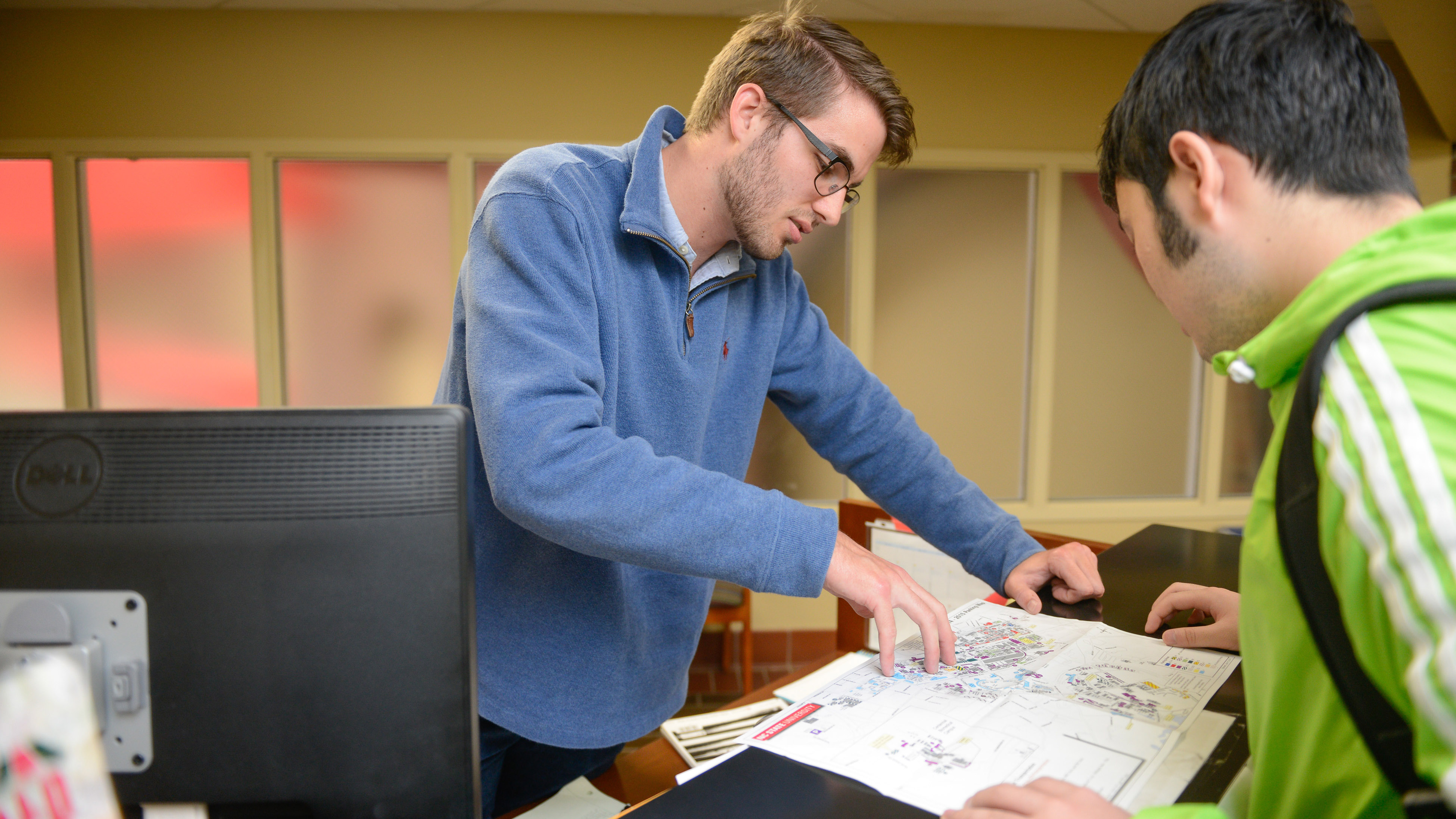
Parking on campus requires a valid NC State Parking Permit. Permits are sold online beginning in early July. Parking permit options are limited for new students. You can request a parking pass on the NC State Transportation website, ncsu.edu/transportation.
Please visit our Transportation page to learn more about the bus system, parking around the IEP building, and other transportation options.
11. Learn More About NC State Google Account
At NC State University, Google products are used on a daily basis. Watch the tutorial videos below to learn about the Google tools you will use most often in the IEP.
Video Tutorials:
Once You Arrive
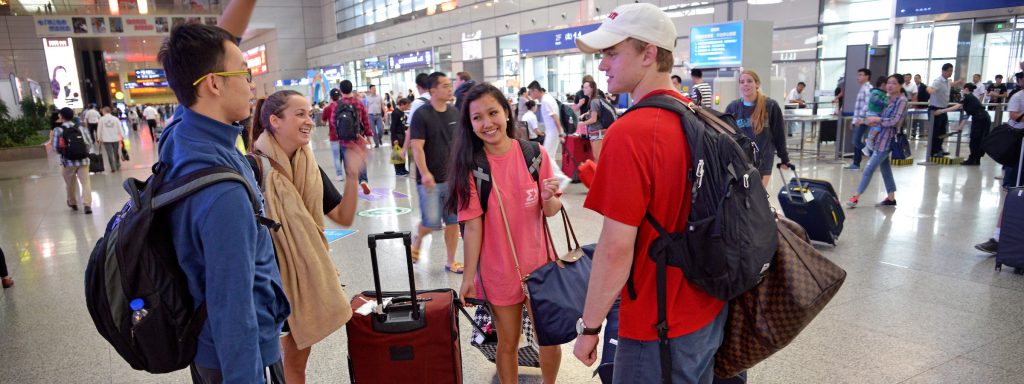
1. Entering the United States: What to do at the Airport
When you travel to the U.S., please carry with you (not in your checked baggage) your:
- Passport with the U.S. visa stamp
- Certificate of Eligibility (SEVIS Form I-20)
- Supporting documentation you provided to obtain the visa.
When you arrive in the U.S. you will automatically be issued an electronic I-94 record (record of your arrivals and departures). After your arrival, you should visit the U.S. Customs and Border Protection (CBP) website to print your I-94. Keep the I-94 printout with your other travel documents.
2. Travel to NC State University
There is one major airport in Raleigh, the Raleigh-Durham International Airport (RDU), located approximately 13 miles (21 kilometers) from the university. The trip from the airport takes approximately 20 minutes.
3. Update Personal Information for SEVIS Record
Once you arrive at NC State University, you must update your SEVIS Local Address, Emergency Contact, and your Local Phone Number.
Video Tutorial:
4. Learn About Current Student Resources
5. Attend Orientation
See the IEP Semester Dates page for the upcoming semester’s orientation dates.
Please note: You must bring your passport with the U.S. visa inside, your I-94, your I-20 and any other necessary documents to orientation (such as documents for dependents, if applicable).
6. Open a Bank Account (Optional)
You are strongly encouraged to open a checking account when you arrive in Raleigh. With a checking account, you will receive a checkbook and an ATM card, which allows you to withdraw cash from your account 24-hours a day.
Services and fees vary but most banks in the area offer special student accounts with minimal or very low monthly charges. Be sure to ask about student accounts when you visit the banks (there are several within walking distance of campus) and have your passport and SEVIS Form I-20 or SEVIS Form DS-2019 with you when you open the account.
If you will be bringing a large amount of money with you at one time, you may also wish to open a savings account. Savings accounts earn interest. Banks also offer additional services such as loans, credit cards, and safe-deposit boxes at a lower cost to students.
Additional guidance on how to open a bank account will be covered during orientation.
7. Choose a Meal Plan
Conditionally admitted students are required to have a meal plan since they will be living on campus. Students that applied directly to the IEP are not required to have a meal plan but can choose to have one. University Dining offers a variety of restaurants, dining halls, convenience stores and vending machines that accept meal plans to make eating with the Pack easy.
To sign up or compare meal-plan options, go to go.ncsu.edu/MealPlans. You have until September 30 each fall and January 31 each spring to make changes.
8. Pay IEP Program Fees
Your IEP program fee and university fees must be paid on or before orientation. This is the Friday before classes begin. The total IEP program fee and mandatory university fees can be found on the Full-Time Program Costs page (fees are subject to change at any time).
Payment will be made through your MyPack Portal. Payment options can be found on the Student Services Center website. Cash and personal checks are not accepted forms of payment.
Video Tutorial:
Note: If you would like to pay your program fees before you arrive, please note that charges will not show on your account until orientation week. This means you will not be able to pay them until then. Guidance on how to pay will be covered during orientation.
9. Shopping and Eating
There are grocery stores within walking distance of campus, and many a short bus ride away. There is also a shopping mall that is easily accessible by bus: Crabtree Valley Mall. There are so many great restaurants in Raleigh; you will not find the time to try them all.
Options Near Campus:
- Hillsborough Street: You will find coffee shops, sandwich shops, pubs, bookstores, and more. Most of the restaurants are inexpensive, aimed at students rather than “fine dining”.
- Mission Valley Shopping Center is located at the corner of Avent Ferry Road and Western Boulevard, about a 20 minute walk from Talley Student Union. Shops include a bookstore, pharmacy, dollar store, cinema, and several restaurants.
- Oberlin Village is located on Oberlin Road between Hillsborough Street and Wade Avenue. Oberlin Village offers more than 100 unique and distinctive shops, cafes, and services. It is about a 20 minute walk from Talley Student Union and is served by the NC State Wolfline Route 2.
Additional Resources:
10. Grant Parent/Guardian Access (Optional)
You can give your parent or guardian online access to view your financial (billing/payment):
Log in to MyPack Portal (mypack.ncsu.edu). Go to Main Menu > Student Self Service > Campus Personal Information > Parent/Guardian Access.
To learn more about your academic records and the laws that protect them visit http://policies.ncsu.edu/regulation/ reg-11-00-01.